Thinking about a newer townhome or condo in Milpitas so you can simplify maintenance and stay close to Silicon Valley jobs and BART? You are not alone. Many buyers want modern finishes, attached garages, and quick transit options without the upkeep of a single-family home. In this guide, you will compare standout newer communities, learn what to expect on tours, see typical pricing and HOA costs, and get a clear checklist for HOA documents and financing. Let’s dive in.
Why Milpitas fits townhome living
Milpitas sits at the crossroads of I-880, I-680, and SR-237, which makes commutes across the South Bay straightforward. If you lean on transit, the Milpitas Transit Center brings you direct BART access, with connections that make rides to Oakland and San Francisco more practical for many commuters. You can review service details and station info for the Milpitas BART station.
Most newer Milpitas townhome communities cluster near the Great Mall and South Main corridor. That puts you minutes from retail, parks, and the Milpitas and Great Mall transit nodes. VTA has also highlighted the Great Mall area as a focus for transit-oriented development, underscoring the growing appeal of living close to services and transit.
What to expect in newer homes
Common layouts and sizes
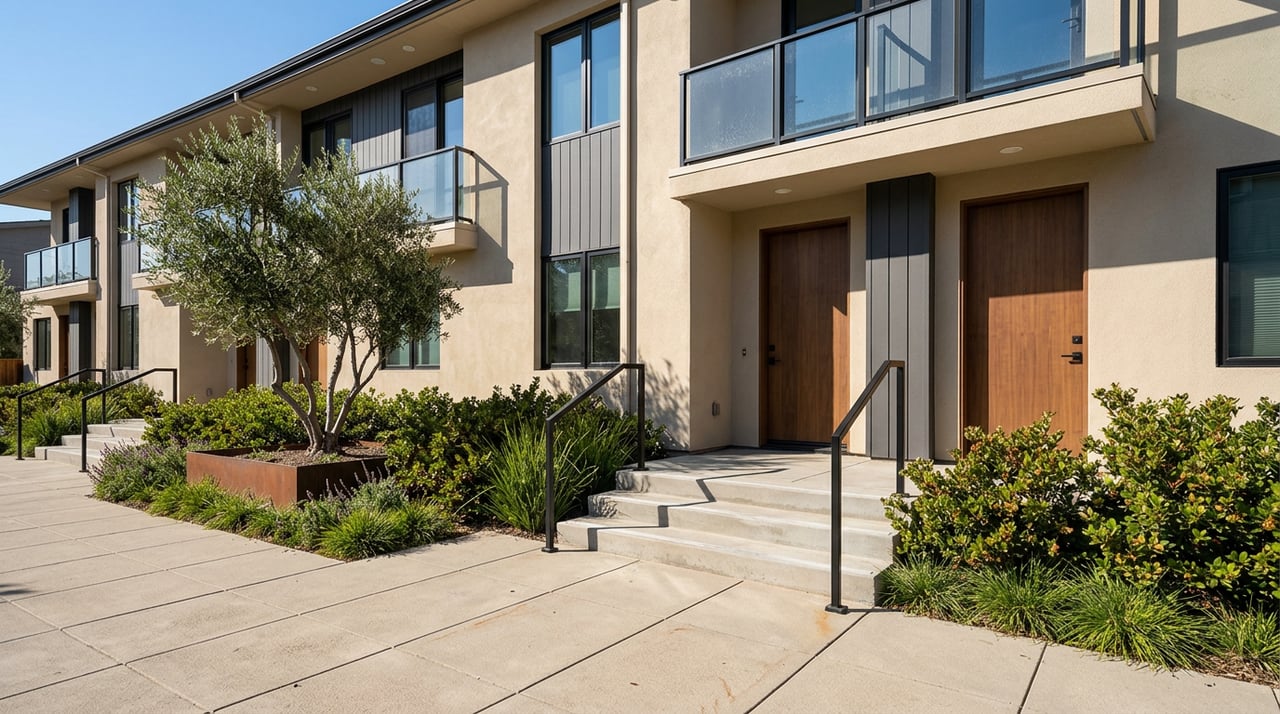
- Three-story townhome designs are standard. You will often see a ground-level garage, main living and kitchen on the second level, and bedrooms on the third.
- Typical floorplans span about 1,270 to 2,200 square feet, with 2 to 4 bedrooms depending on the community and plan.
Finishes and features you will see often
- Open kitchens with islands, quartz or granite counters, and stainless appliances.
- Smart home features, in-unit laundry, energy-efficient systems, and upgraded flooring.
- Many builders offer a design studio so you can personalize finishes.
Community amenities and EV readiness
- Pocket parks, tot lots, landscaped courtyards, and sometimes a small clubhouse or fitness room.
- Secure or attached two-car garages are common in townhome products.
- Some projects market all-electric homes or EV-ready garages. Always ask the HOA about charger policies and any pre-wiring already in place.
Compare newer Milpitas communities
Use this quick table to line up options. Prices and dues are examples from current builder materials and recent listings and can change quickly. Always verify the latest figures before touring.
| Community |
Builder |
Plans |
Sq Ft |
Price start |
HOA example |
Nearest transit or highway |
Key amenities |
| Toll Brothers at South Main |
Toll Brothers |
3 beds, 3 baths typical |
~1,565–1,684+ |
About $1.2M+ |
Low $400s per month on recent listings |
Walkable to Milpitas BART and Great Mall; near I-880/I-680/SR-237 |
All-electric marketing, attached 2-car garages, pocket park, design studio personalization. View community |
| Parkside West |
Toll Brothers |
2–4 beds |
~1,270–2,200 |
Low $1.2M–$1.25M |
Varies by phase |
Marketed as walking distance to Milpitas BART; quick freeway access |
Townhome-style condos, modern finishes, small community green spaces. Press announcement |
| The District |
Pulte Homes |
Mostly 3-bed townhomes |
~1,518–2,175 |
Low $1.1M+ for select plans |
Varies by plan |
Close to Great Mall, BART, and major freeways |
Energy-efficient marketing, several 3-story layouts. View community |
| Centria (mid-rise condos) |
Multiple resales |
1–2 beds |
Varies by stack |
Often below new-build townhomes |
Low-to-mid hundreds per month typical in examples |
Near Great Mall and central Milpitas |
Contemporary mid-2000s building with a more affordable entry point vs. new townhomes |
| Parc Metro (townhomes) |
Multiple resales |
3 beds common |
Tri-level layouts |
Roughly $900k–$1.4M+ depending on updates and date sold |
Community-managed dues |
Near transit and shopping |
Established complex with pool, spa, clubhouse and near-transit location |
Pro tip: If you want the newest systems and finishes, the Toll Brothers and Pulte projects are representative of today’s Milpitas townhome product. If you want a lower entry price, established resales at Centria or Parc Metro can be compelling comparisons.
Do your HOA homework early
Buying into a community means buying into a budget, rules, and long-term maintenance plan. California’s Davis–Stirling Act lists what sellers and associations must provide buyers, so use it to your advantage.
Must-have documents
- Governing documents: CC&Rs, bylaws, operating rules, and any architectural guidelines. These show use restrictions, pet and rental policies, and modification rules. See the statute that lists required disclosures in Civil Code 4525.
- Resale or estoppel certificate: Confirms the unit’s dues, any unpaid assessments or fines, and association statements. Delivery and fees are addressed in Civil Code 4530.
- Annual budget, reserve study and funding summary: These show whether the HOA is planning for roof, siding, balcony, and other major replacements. Summaries must be distributed per Civil Code 5300.
- Insurance summary: Master policy limits, deductibles, and whether earthquake coverage is included. This informs your HO-6 policy choices.
- Exterior elevated elements report: If applicable, the most recent balcony and walkway inspection report must be included starting in 2026 under SB 410 amendments. Learn why these reports matter in this overview of SB 410 and SB 326 reporting.
Timing note: Associations have up to 10 days after a written request to deliver records. Factor this into your offer timeline and HOA contingency so you have time to review.
Smart questions to ask the HOA
- What do monthly dues cover line by line, and are any utilities included?
- What is the latest reserve study date and the percent funded? Are special assessments planned for the next 12 to 24 months?
- Any pending or recent litigation or construction defect claims? Ask for documentation.
- Owner occupancy and rental percentage today, plus any rental caps. If you plan to short-term rent, review CC&Rs and the City of Milpitas short-term rental requirements. See the city’s STR FAQ.
- Is the association professionally managed? Who is the primary contact and how often are financials audited?
- What does the master insurance policy cover and what are the deductibles? Is earthquake insurance included or recommended?
- EV charging: Are there policies for installing chargers in deeded garages or common areas, and is there existing conduit pre-wiring?
Red flags to watch
- Low reserves or a history of recent, large special assessments. That can signal higher near-term costs.
- Ongoing lawsuits involving the association, especially for building systems or water intrusion.
- Balcony or exterior walkway inspection findings without a clear, funded repair plan.
Financing checkpoint for condos and townhomes
Condo and townhome lending can be different from single-family homes because lenders review the project. Before you make an offer, confirm the community’s status with your lender.
- FHA and VA loans: Check whether the project appears on the FHA approved list. If not, ask your lender about FHA single-unit approval options. Use the FHA condominium search to confirm status.
- Conventional lending: Fannie Mae and Freddie Mac have project eligibility standards for warrantable condos, which can affect rates, down payment options, and approval timelines.
- Non-warrantable options: If a project does not meet agency criteria, you may still have financing options, but terms can be less competitive. Get a project-specific pre-approval early.
Your first tour checklist
Bring this list when you visit a unit. It helps you spot deal-breakers early and frame your follow-up questions.
On the unit tour
- Parking and storage: Confirm all assigned spaces and storage areas on site. If there is a garage, test the door and note whether there is EV-ready conduit.
- Sound and privacy: Stand in main living areas and bedrooms. Note street, rail, or neighboring unit noise at different times of day.
- Windows, doors, and walls: Look for water staining around frames and any signs of moisture intrusion.
- Systems: Find the water heater, furnace, and electrical panel. Ask about age, service records, and replacement history.
After the tour
- Request the resale or estoppel packet immediately. Ask for CC&Rs, bylaws, rules, budget, reserve study, insurance summary, 12 months of meeting minutes, and the estoppel or demand statement. Delivery timing is addressed in Civil Code 4530.
- Ask for the most recent balcony or exterior elevated elements report and whether repairs are complete or scheduled. See the SB 410 update on required disclosure in this summary.
- Confirm FHA or VA approval on the FHA condo search if you need those programs, and verify that the HOA will complete any lender questionnaires.
Pricing snapshots and how to compare
- New Toll Brothers townhomes at South Main: Plans often around 1,565 to 1,684+ square feet with pricing marketed from about $1.2 million as of early 2026. Recent HOA examples have appeared in the low $400s per month. See the community page for specs and updates.
- Parkside West by Toll Brothers: Townhome-style condominiums reported at roughly 1,270 to 2,200 square feet, with prices starting in the low $1.2 million range when sales opened. See the press announcement for early details.
- The District by Pulte: Three-bedroom townhomes often around 1,518 to 2,175 square feet, with builder materials showing some plans starting from the low $1.1 million range. See current offerings on the community page.
- Centria (mid-2000s condos): One to two bedroom condos typically offer a lower price point than brand-new townhomes, with HOA dues that vary by unit and what utilities or insurance the HOA includes.
- Parc Metro (established townhomes): Resale three-bedroom townhomes in this community have ranged from about $900,000 to above $1.4 million depending on updates and the year sold. Dues support shared amenities like a pool, spa, and clubhouse.
How to read the differences:
- Newer townhomes tend to command higher prices per square foot but deliver modern systems, lower immediate maintenance, and attached garages.
- Established condos often provide a lower entry price with efficient layouts, but may have smaller private garages or different parking formats.
- HOA dues reflect what is covered. Pools, clubhouses, and shared utilities can increase dues. Compare line items side by side.
Next steps and a simple plan
Get pre-approved and confirm with your lender whether the target project is FHA or VA eligible and considered warrantable. Use the FHA condominium search as a starting point.
Order the HOA resale or estoppel package as soon as you are in contract. Give yourself enough time to review the governing documents, budget, reserve study, insurance, meeting minutes, and any balcony inspection reports required under SB 410. Key requirements appear in Civil Code 4525, Civil Code 4530, and Civil Code 5300.
Bring this tour checklist to showings and verify parking, storage, EV policies, and any rental rules in writing. If you plan to short-term rent, review the city’s STR FAQ and the HOA’s CC&Rs.
If you are considering new construction, ask about builder warranties, the timing of HOA turnover from the developer to owners, and how reserves will be funded after turnover.
Ready to compare floorplans and make a smart offer timeline? Reach out for local guidance, patient walkthroughs of HOA documents, and calm, step-by-step support from offer to keys. Connect with Louis Ponce for a friendly, bilingual consultation.
FAQs
What makes Milpitas attractive for townhome and condo buyers?
- Proximity to major job centers, the Milpitas BART station, and three key freeways gives you flexible commute options with modern, low-maintenance housing choices.
How close are newer communities to BART and VTA in Milpitas?
- Many new builds cluster near the Great Mall and South Main corridor, where you can often walk or enjoy a short ride to the Milpitas BART and VTA connections at the transit center.
What HOA documents should I review before removing contingencies?
- Ask for CC&Rs, bylaws, rules, the resale or estoppel statement, the annual budget, reserve study and funding summary, insurance details, board minutes, and the most recent exterior balcony report where applicable.
Can I use FHA or VA financing for a Milpitas condo or townhome?
- It depends on project eligibility. Use the FHA condo search to check approval status and ask your lender about single-unit approval for FHA if the project is not fully approved.
Are short-term rentals allowed in Milpitas condo or townhome communities?
- The City of Milpitas requires short-term rental registration and permits, and many HOAs have rental caps or rules. Verify both the city’s STR requirements and your HOA’s CC&Rs before you buy.